
Design has a way of revisiting the past. Colours that were once considered outdated find their way back into today's interiors. Familiar patterns are reimagined. Materials that once defined a generation become inspiration for years to come.
Tile is no exception. From the geometric patterns of Art Deco to the refined simplicity of Minimalism, each decade has left its mark on interior design.
So, let's take a trip through time and look back at some of the tile styles that defined each era, and how their influence continues to shape modern-day design.
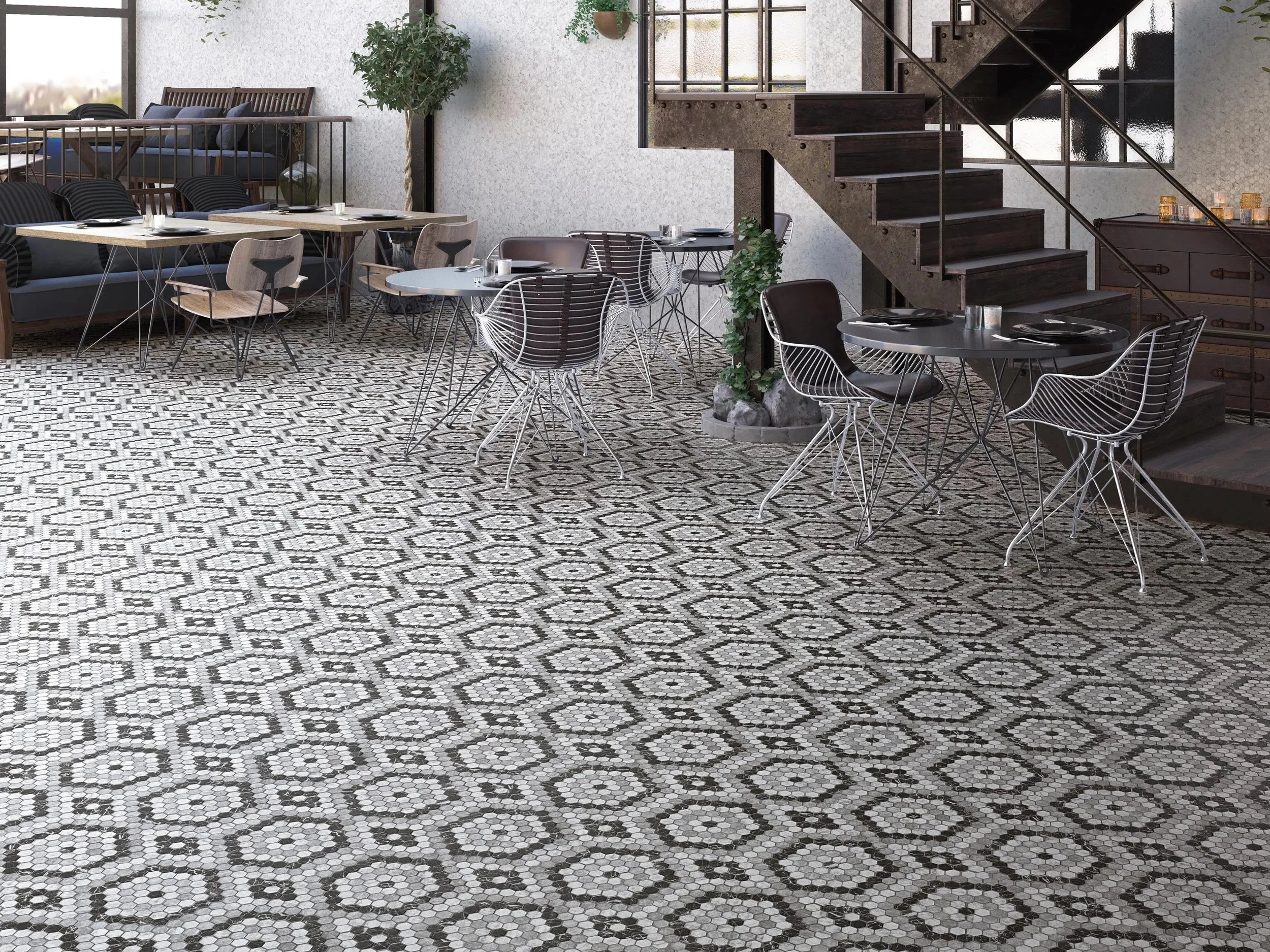
The 1920s: Art Deco
The 1920s were all about glamour and drama. Art Deco embraced symmetry, geometric shapes, bold contrasts and decorative details. Tile played an important part in this aesthetic, with intricate mosaics, repeating patterns and contrasting borders bringing character to floors and walls. Zigzags, chevrons and fan-shaped motifs became recognizable features, while black-and-white combinations and richer colours added visual interest.
The modern interpretation: Art Deco-inspired tile brings pattern and character into contemporary spaces. Geometric mosaics, contrasting colours and symmetrical layouts offer a way to revisit the era's decorative style without recreating it entirely. Its influence would resurface decades later through the bold geometry and decorative details of 1980s Postmodernism.

The 1950s: Mid-Century Modern
The 1950s brought a fresh approach to interiors, with an emphasis on clean lines, simple forms and functional design. Mid-Century Modern interiors paired streamlined furniture and organic shapes with a more playful use of colour. Pastel pinks, mint greens, powder blues and soft yellows found their way into bathrooms and kitchens, while square ceramic tiles and small-format mosaics added character to everyday spaces.
The modern interpretation: Mid-Century Modern influences can still be seen in simple geometric patterns, clean layouts and softer colour palettes. Pastel tile adds a subtle touch of nostalgia, especially when paired with modern fixtures and natural materials. The era's appreciation for simplicity and function also helped shape the more pared-back interiors that followed.

The 1970s: Bohemian Style
The 1970s embraced a relaxed and eclectic approach to interiors. Inspired by nature, global influences and a growing interest in self-expression, Bohemian design brought together earthy tones, natural materials and layered textures. Terracotta, rust, olive and mustard became defining colours, while wood, stone, rattan and textured surfaces added warmth and character. Tile reflected this look through rustic finishes, earthy palettes and expressive patterns.
The modern interpretation: Bohemian influences can be seen today in warm colour palettes, natural-looking materials and textured tile. Muted terracotta tones paired with wood and stone-look surfaces bring the relaxed character of the era into contemporary interiors. The appreciation for natural variation and imperfect finishes is also something that continues to shape how we look at materials today.
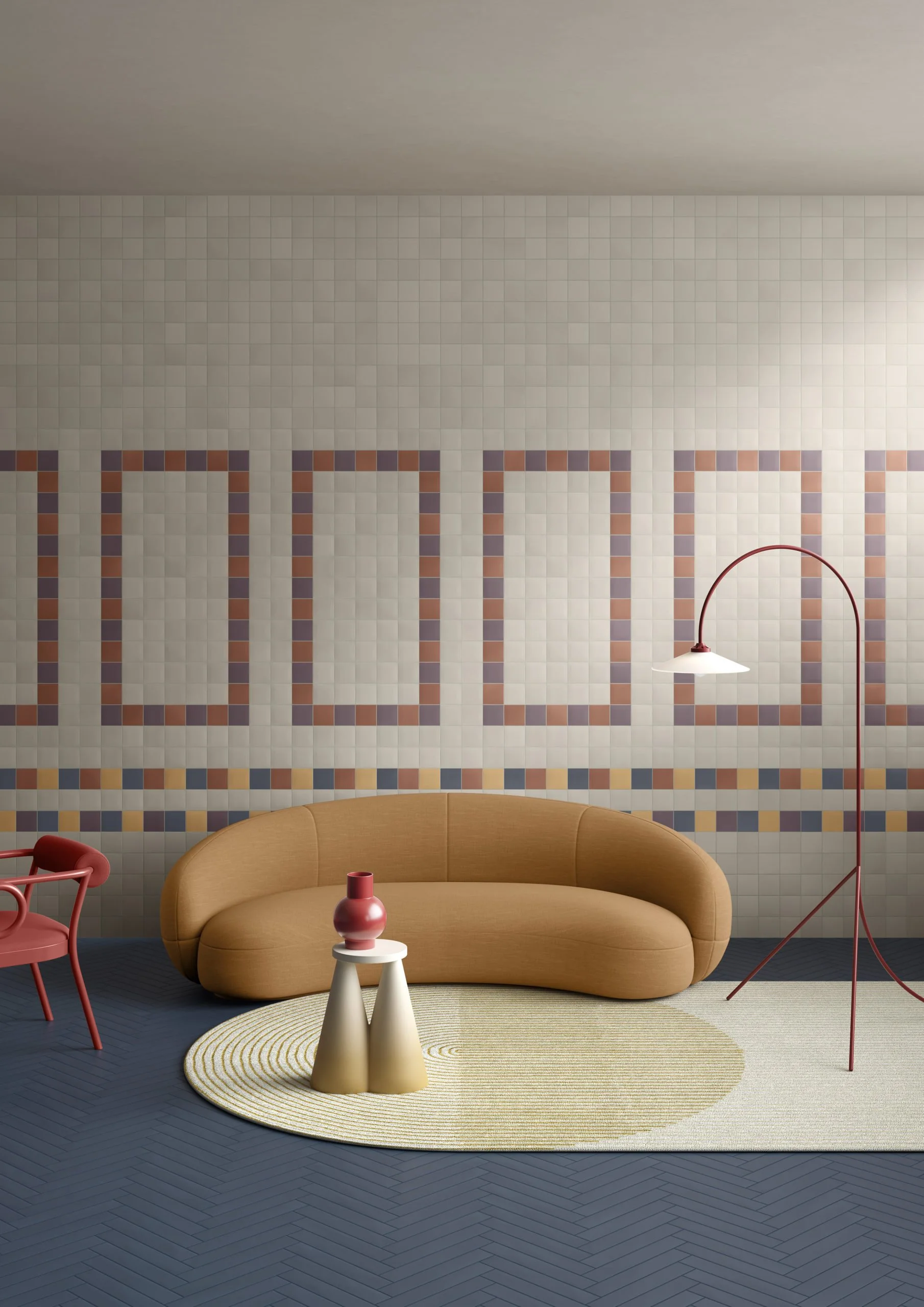
The 1980s: Postmodernism
The 1980s took a more expressive approach to interiors. Bold colour combinations, graphic patterns, glossy finishes and strong geometric forms became part of the decade's design language. Postmodernism challenged the restraint of earlier modernist design, embracing unexpected combinations, playful shapes and a willingness to experiment. It also revisited earlier influences, including Art Deco, through decorative forms, symmetry and bold geometric details. Subtlety wasn't always the goal.
The modern interpretation: Postmodern influences bring a sense of personality into contemporary spaces. A saturated tile colour, a high-contrast pattern or a glossy feature surface can introduce a playful element without overwhelming the overall design. Geometric patterns, in particular, continue to offer a way to make a statement, whether through a bold feature or a more subtle detail.

The 1990s: Minimalism
As the 1990s progressed, many interiors moved towards quieter palettes and more understated finishes. Beige, cream and soft grey became popular choices, alongside natural wood and stone-inspired materials. Compared to the more decorative interiors of the 1980s, the overall look was more restrained, with an emphasis on simple forms, neutral surfaces and materials that could work across different styles.
The modern interpretation: Neutral tile remains a design staple, but today it is often a starting point rather than the whole story. Texture, veining, tonal variation and larger formats bring more depth to understated palettes, leaving room to experiment with colour, pattern and contrasting materials. The warmth of these softer neutrals also carried into many 2000s interiors, although often with more decorative finishes.
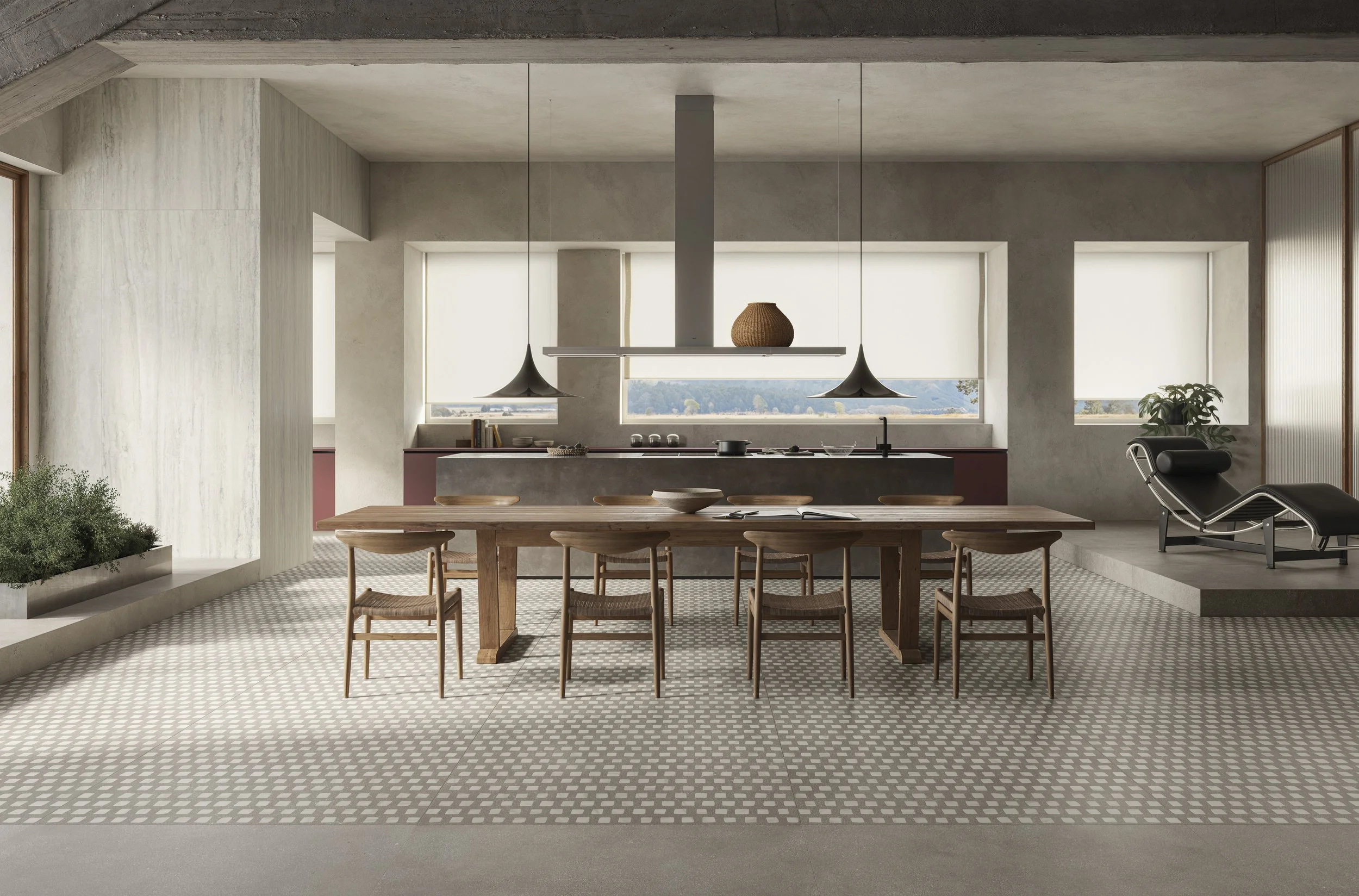
Present Day: Contemporary Design
Today, contemporary interiors draw from a little bit of everything. Clean lines and neutral foundations sit alongside organic shapes, expressive patterns, natural materials and more tactile finishes. Rather than following one defining look, contemporary design is about bringing different influences together and making them feel personal. In tile, this means everything from understated stone-inspired surfaces to bold colours, intricate patterns and textured finishes. Styles like Japandi, for example, bring together the simplicity of Japanese and Scandinavian design, while other interiors take a more eclectic approach. The possibilities are much less about following a particular era and more about finding the right combination of materials, colours and finishes for a space.
Every era leaves something behind. Some styles make a comeback almost exactly as they were, while others find a new expression in the materials and spaces around us. And who knows? The details we're drawn to today might just become the inspiration for the next generation of design. After all, today's interiors are tomorrow's throwbacks.