
The Many Faces of Stone-Look Tile
Stone has always been a core reference in design. In porcelain, those natural materials are reinterpreted into surface options that capture their movement, texture and character in a more controlled and versatile form.
Each stone type offers a different visual direction, defined by variation, grain and depth. Together, they form a set of options that influence how a space feels through surface alone.
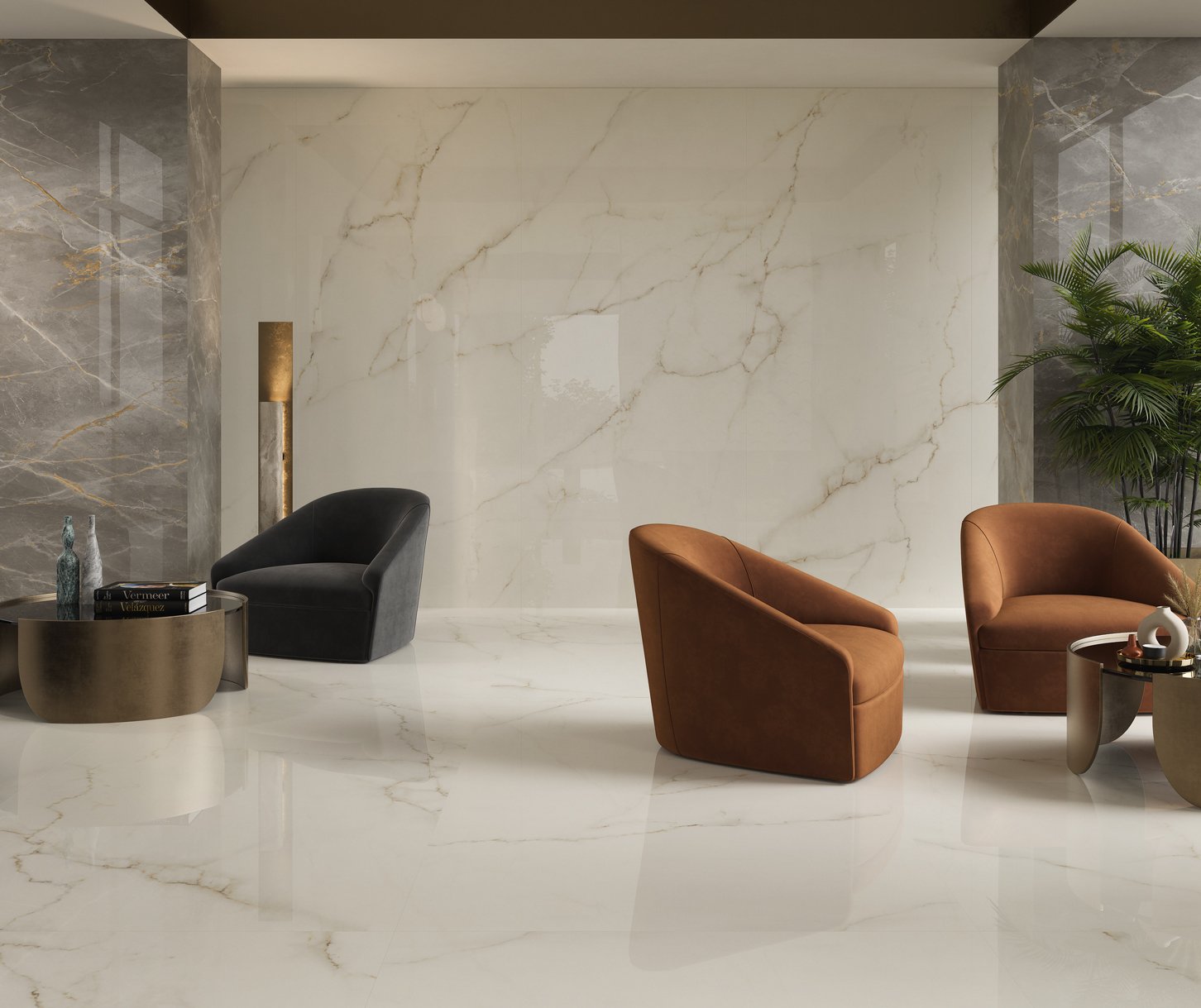
Marble
Marble carries movement through veining that flows across the surface, with tonal variation adding depth without heaviness. It is often used to introduce softness and direction across larger areas.
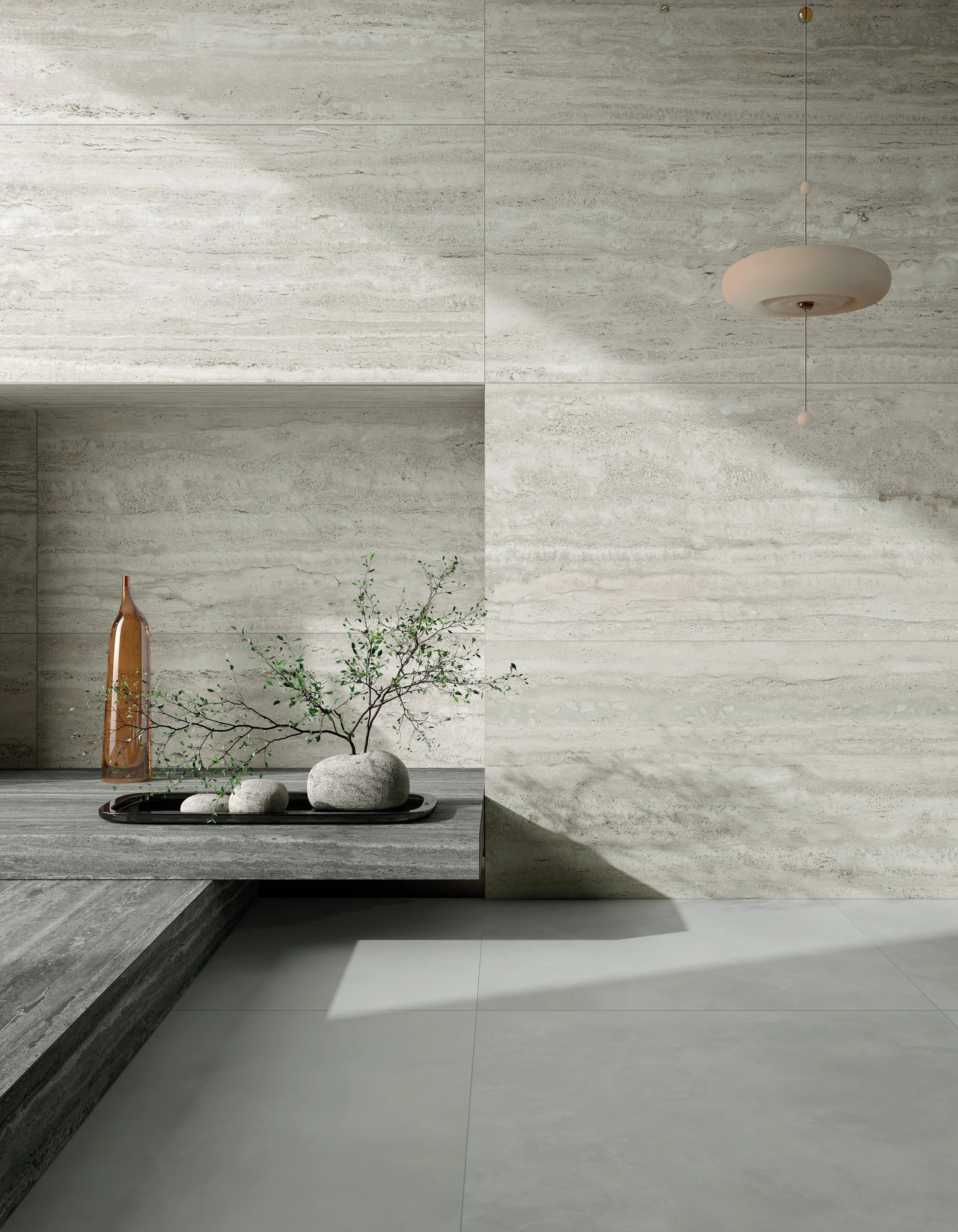
Travertine
Travertine reads through horizontal layering and natural shifts in tone. The surface feels structured but organic, bringing warmth and a grounded architectural quality to a space.
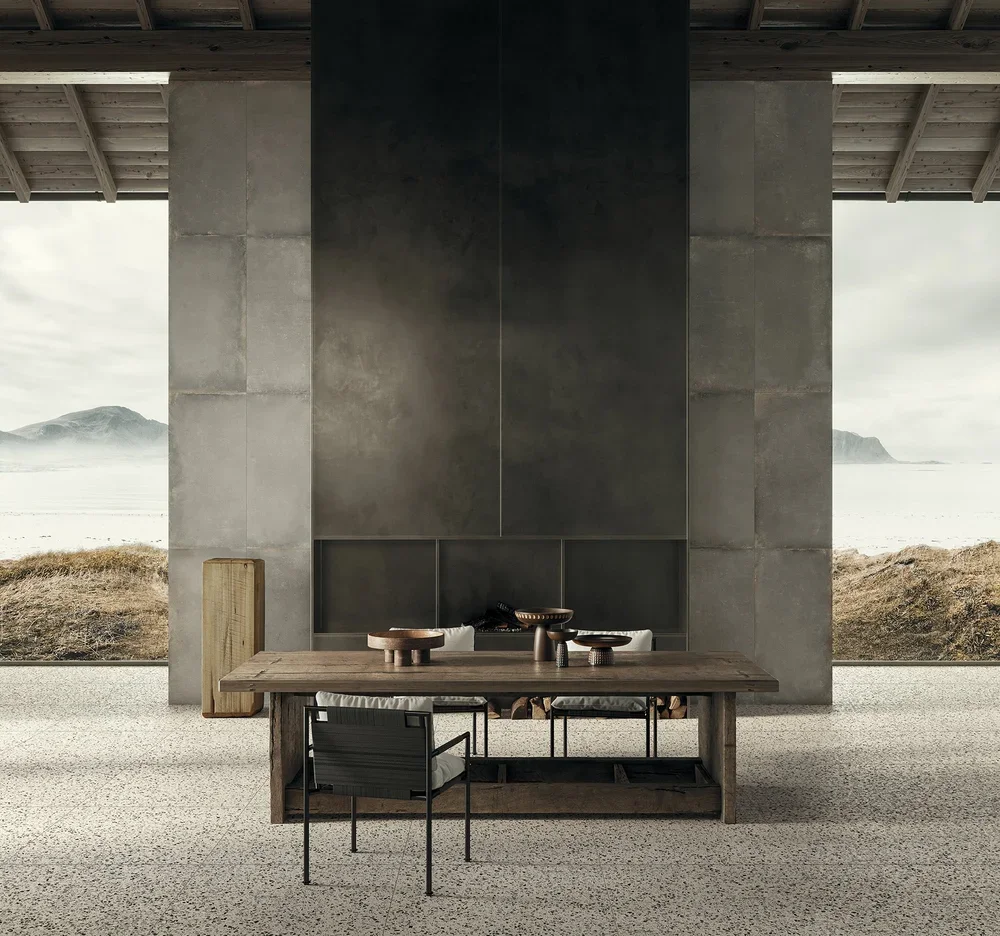
Terrazzo
Terrazzo is built through visible fragments within a single surface. The composition creates rhythm through variation, where smaller elements form a cohesive whole.
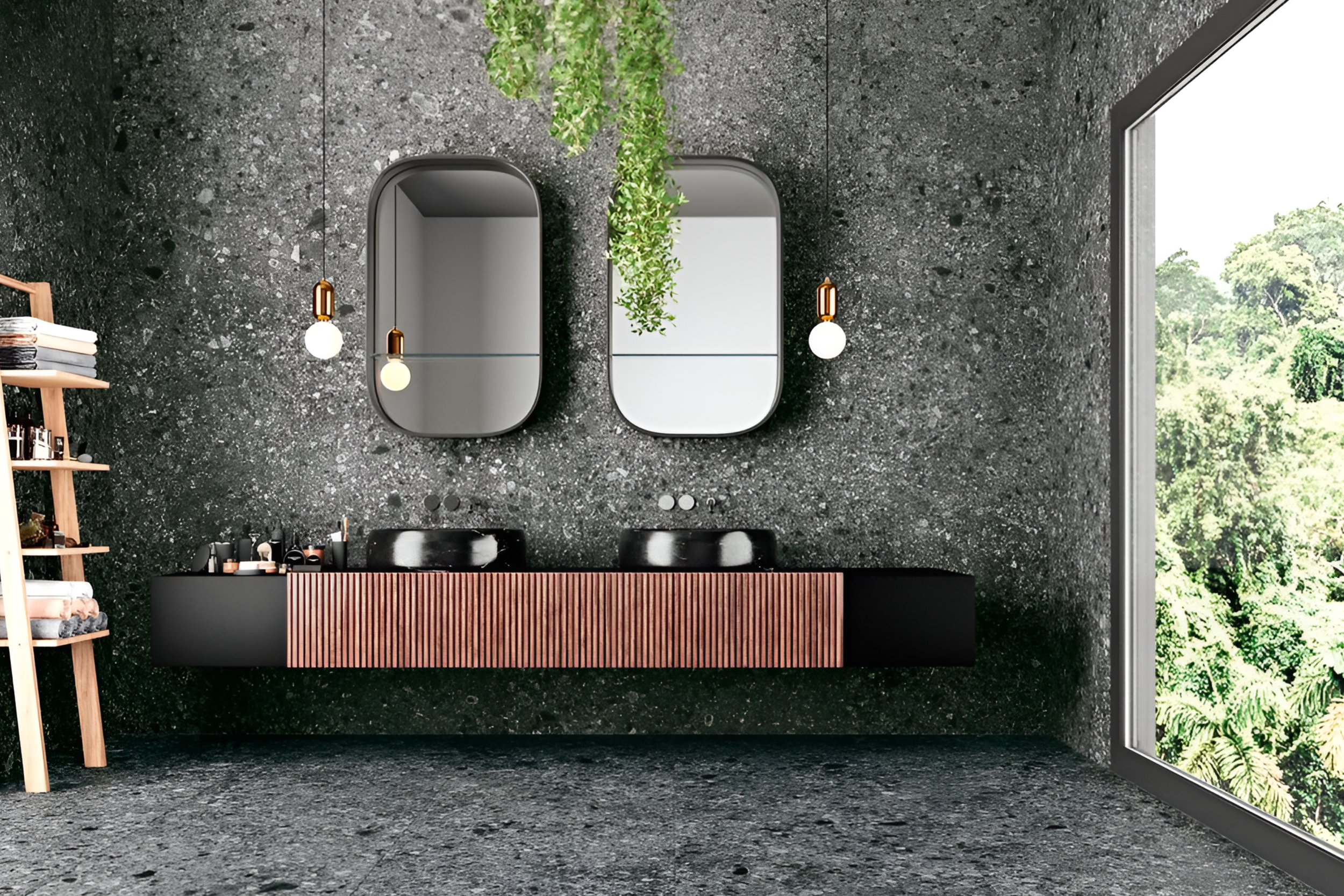
Granite
Granite surfaces bring a tighter grain and more compact visual structure. Small variations are distributed evenly, creating depth without strong movement or pattern.

Pebble
Pebble look surfaces introduce granular variation across the field. The texture feels irregular but controlled, adding quiet depth through distributed detail.

Breccia
Breccia brings fragmented stone together within one surface. The contrast between elements creates a stronger visual composition while still reading as a single material.

Onyx
Onyx carries internal variation where colour and veining sit within the surface rather than across it. It creates a more dramatic presence, often used to introduce contrast or focal impact.
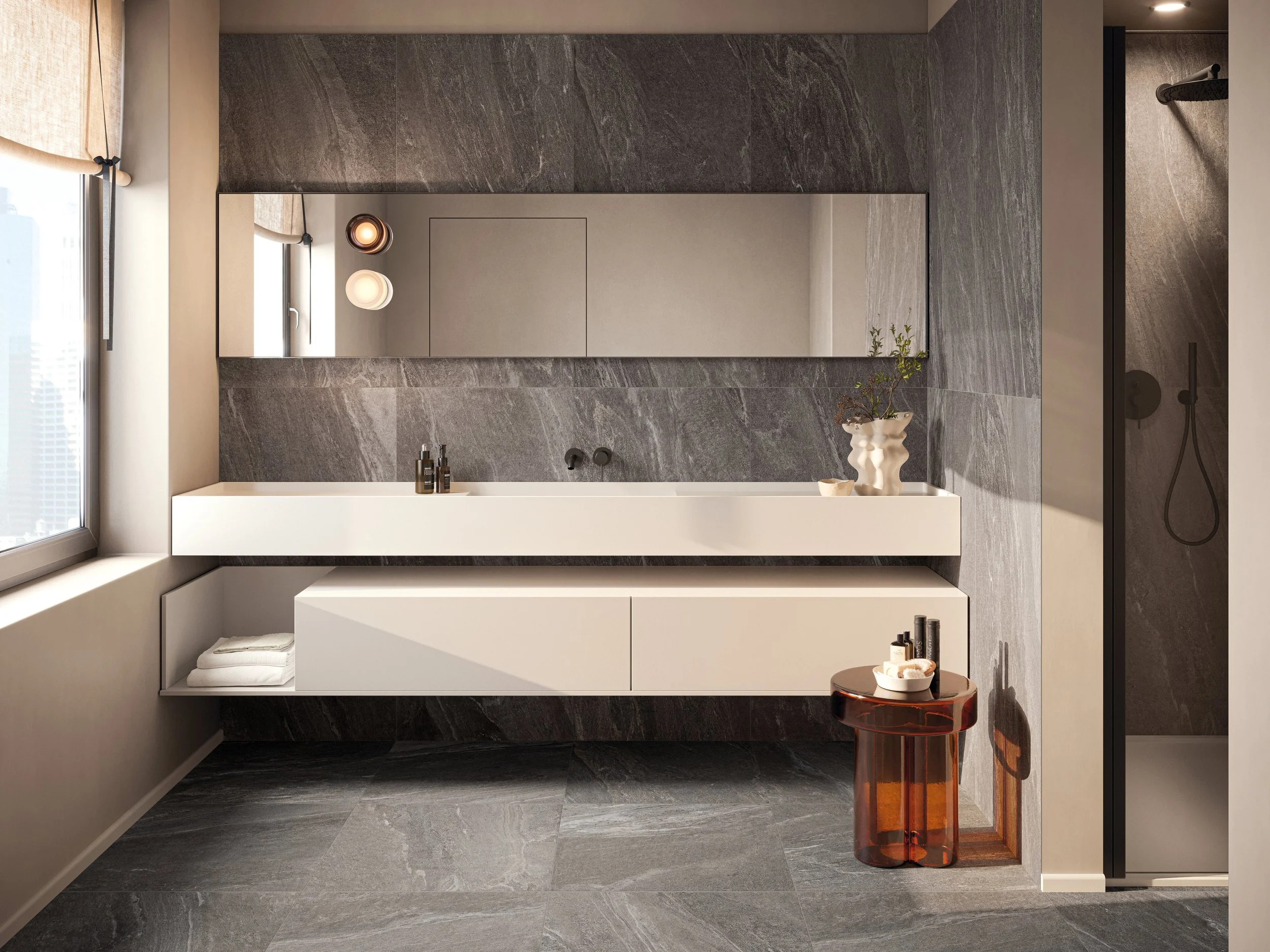
Quartzite
Quartzite sits between structure and softness, with subtle crystalline variation that adds detail without overwhelming the surface. It feels refined, balanced and natural.

Agate
Agate introduces layered internal movement, where bands of colour and variation create depth within the surface itself. It feels more expressive and visually active than traditional stone looks.
Stone looks form a practical reference set within porcelain design. Each one offers a different surface direction through movement, grain and composition, allowing material choices to directly shape the feel of a space.